Is Crypto in Serious Trouble as Bitcoin Sits Near $80,707?
You can order the same kind of articles for your own video to boost it on YouTube and Google. Just message the Telegram bot @sat_sit_bot. It writes articles around your video, embeds the video and publishes them on popular niche websites (no ads). Free trial — 50 articles.
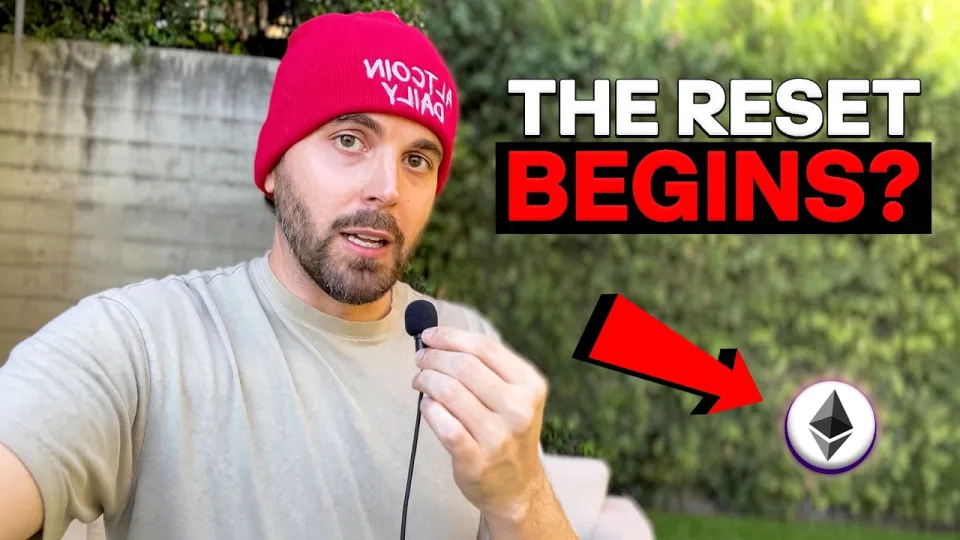
Crypto is not in serious trouble in any structural sense, but the market is in a painful drawdown: with Bitcoin trading near $80,707 as of October 24, 2026, its five-year compound annual growth rate works out to just 5.78%, a return that barely beats cash and tests the patience of anyone who bought the top. The trouble is real for leveraged traders and short-term speculators, while long-term holders are treating the same price action as an accumulation window. Altcoin Daily's breakdown of the crash narrative is a useful starting point, and the channel's Altcoin Daily merch store is where supporters can pick up gear while the market sorts itself out.
What the crash narrative actually says
The core of the bearish case is not that crypto has broken, but that the returns have stopped justifying the risk. A 5.78% five-year CAGR on Bitcoin is the number that does the most damage to the bull argument, because it undercuts the idea that holding through volatility is automatically rewarded. When an asset with Bitcoin's drawdown history delivers roughly the same annualized return as a savings product, the risk-adjusted math looks bad, and that is exactly the mood the crash coverage is reflecting.
The second leg of the bear case is relative performance. Bitcoin has historically printed a higher high in every cycle, but Ethereum has not followed the same pattern, which raises the question of whether the old four-year cycle template still applies across the whole market. That asymmetry is why so many portfolios built on the assumption that altcoins simply lever up Bitcoin's moves are now underwater.
Why long-term holders are not panicking
For investors with a multi-year horizon, a crash is a scheduling event rather than a verdict. The logic is straightforward: if your thesis has not changed, a lower price is a better entry, and averaging down lowers your cost basis without requiring you to predict the bottom. That is why so much of the audience response to crash content is about buying more rather than selling.
There is also a practical discipline argument. Investors who check prices daily tend to react to noise, while those who step away for weeks at a time report less stress and fewer bad decisions. Not looking at the chart is not denial; it is a deliberate choice to let a long-term plan run.
The numbers behind the drawdown
Three figures frame the current situation more clearly than any narrative.
- $80,707 — the Bitcoin price cited as of October 24, 2026, which sets the reference point for every return calculation below.
- 5.78% — Bitcoin's five-year compound annual growth rate at that price, the single most quoted statistic in the crash discussion.
- Higher highs every cycle — the historical pattern Bitcoin has kept and Ethereum has not, which is the crux of the altcoin underperformance debate.
A CAGR is not a forecast. It is a rearview measurement that depends entirely on the start date, and a five-year window that begins near a cycle top will always flatter the bears. Still, the figure matters because it is what a new entrant actually experiences, and new entrants set the marginal demand.
What to watch instead of the daily candle
Watching the daily candle tells you almost nothing about whether a cycle is intact. More useful signals include whether Bitcoin continues to set higher highs across cycles, whether Ethereum can break its own pattern of failing to do so, and how much leverage has been flushed out during the decline. Position sizing and cost basis matter more than any single price print.
For anyone holding altcoins, the relevant question is concentration. A portfolio that is mostly beta to Bitcoin will behave like Bitcoin with extra downside, and a crash exposes that quickly. Reviewing which holdings have an independent thesis, and which were bought only because everything was going up, is a more productive use of a red week than refreshing charts.
Common questions and doubts from the community
The most frequent concern is timing: whether this is a normal correction or the start of something longer. Nobody can answer that with certainty, and anyone who claims to is guessing. What can be answered is whether your position size lets you hold through another 30% decline without being forced to sell.
The second recurring doubt is about conviction in specific assets, particularly Solana and Ethereum, and whether either can outperform Bitcoin in the next cycle. The honest framing is that Bitcoin's cycle pattern is documented, while the altcoin case rests on adoption and usage that has to keep growing. The third theme is simpler: many investors are prioritizing personal financial comfort over adding to positions right now, which is a legitimate allocation decision rather than a failure of nerve.
Where to find Altcoin Daily's links
All official links referenced in the breakdown are collected here:
- Altcoin Daily merch store — official channel merchandise.
Bottom line
A crash is a stress test of your plan, not proof that crypto is finished. Bitcoin near $80,707 with a 5.78% five-year CAGR is a weak return by the asset's own history, and Ethereum's failure to match Bitcoin's higher-high pattern is a genuine open question. But the investors doing best in this environment are the ones who sized positions so they could keep buying rather than sell in fear. For the full breakdown, see the video from Altcoin Daily, and if you want to support the channel, visit the Altcoin Daily merch store.
Key takeaways
- Bitcoin was quoted at $80,707 as of October 24, 2026.
- Bitcoin's five-year CAGR at that price is 5.78%, a modest return for a high-volatility asset.
- Bitcoin has printed higher highs every cycle, while ETH has not matched that pattern.
- A crash is framed by long-term holders as an opportunity to buy more and average down.
- Altcoin Daily's video breakdown covers the market crash narrative and what investors should watch.
Questions & answers
Is crypto actually crashing, or is this normal market behavior?
What is happening is a drawdown, not a structural collapse. Bitcoin near $80,707 with a 5.78% five-year CAGR is a disappointing return, but the network is still running and long-term holders are treating the weakness as an entry point rather than an exit.
Should I buy more during a crypto crash?
Only with money you do not need for several years and only if your thesis has not changed. Averaging down lowers your cost basis, but it also increases exposure, so size the position so you can survive another sharp decline without being forced to sell.
Why has Ethereum not kept pace with Bitcoin's cycle highs?
Bitcoin has historically set a higher high in each cycle, while Ethereum has not matched that pattern, which is why many altcoin portfolios have lagged. The gap comes down to demand and usage, and it is the main argument against assuming altcoins simply amplify Bitcoin's moves.
How often should I check crypto prices during a downturn?
Less often than you think. Investors with a multi-year horizon report less stress and fewer impulsive trades when they stop checking daily, and some deliberately go weeks without logging in. Review your allocation on a schedule instead of reacting to every red candle.
Source: Crypto Investors Are In Serious Trouble (market crash) · Markdown version